Fly fishing

Char, trout and clear mountain water.

The house sits beside the Chikuma River, with snowmelt streams running off the mountains on every side. This is a guide to the water nearby, the fish in it, and the rods and flies to bring.

  • Trout and char seasonIwana, yamame and rainbow trout in the local cooperative's waters
  • Day permit¥5,000 for the year · junior-high age and under free · extra if bought on the bank
  • Minimum sizeIwana, yamame and rainbow trout at or under 15 cm go back
  • Dace, chub and carpNo closed season for ugui, oikawa and koi

These are the published rules of the Kōsui Fisheries Cooperative, which manages the Chikuma River and its tributaries around Iiyama. Other rivers on this page belong to other cooperatives with their own dates and fees. Always check the current rules for the water you are fishing.

Where to fish

Rivers and lakes near the house.

WaterFrom the houseCharacterMain fly targets
Chikuma RiverIiyamaMinutesJapan's longest river: wide, strong water with riffles, glides and deep pools. Best waded at the edges.Rainbow trout, ugui, oikawa, smallmouth bass, carp
Taru RiverTarukawa, KijimadairaAbout 20 minA cold freestone tributary falling from the Shiga highlands, with pocket water and plunge pools.Iwana, yamame
Maguse RiverKijimadairaAbout 20 minA small, steep mountain stream, tight and shaded, suited to short rods and tenkara.Iwana, yamame
Kitano RiverSakaeAbout 30 minA quiet valley stream on the Niigata border with easy wading and little pressure.Iwana, yamame
Yomase RiverYamanouchiAbout 30 minA broader, boulder-strewn river below Shiga Kogen with room to cast.Yamame, iwana, rainbow trout
Seki RiverMyokoAbout 45 minA snowmelt river off Mt Myoko that runs high and cold well into early summer.Iwana, yamame
Nakatsu RiverAkiyama-gōAn hour or moreA remote gorge river in one of Japan's most isolated valleys. A full-day trip.Iwana
Zako RiverOku-ShigaOver an hourA famous high-country stream of wild, never-stocked iwana. The headwaters are closed to protect them.Wild iwana only
Lake NojiriShinano-machiAbout 40 minA deep, clear highland lake, best fished from a boat.Smallmouth bass, largemouth bass

Drive times are rough guides. Snowmelt keeps the streams high and cold from April into June; the smaller tributaries clear first. Tell us your dates and experience when you enquire and we'll suggest where to start.

Species & flies

What lives here, and what it eats.

Rods, line weights and proven patterns for each fish, with hook sizes. Local hatches vary from stream to stream, so treat these as a well-stocked starting box.

Native species

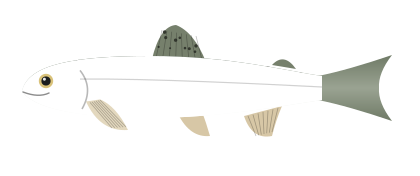
Iwana 岩魚 · white-spotted char

The fish of the headwaters: dark, pale-spotted and bold. Iwana hold in pockets, undercuts and plunge pools and will rise freely to a big dry fly. Typically 18–30 cm, with larger fish in the deep pools.
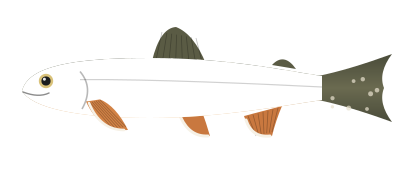
Iwana, a white-spotted char: dark olive back covered in pale cream spots, with an orange belly and white-edged lower fins
  • Rod 7' – 7'6" · #2 – #3
  • Line Floating, double taper
  • Leader 7.5 – 9 ft · 5X – 6X
  • Tenkara 3.3 – 3.6 m rod
TypePatternHook sizeWhen
DryElk Hair Caddis#10 – #14May – Sep, the all-round searching fly
Royal Wulff / Stimulator#10 – #12Fast, broken pocket water
Parachute Adams#12 – #16All season
Parachute Ant#12 – #16Jul – Sep
Foam Beetle#10 – #14Jul – Sep, under overhanging trees
NymphBead-head Hare's Ear#10 – #14Mar – May, cold high water
Bead-head Prince#10 – #14Deep plunge pools
Stonefly nymph (dark)#8 – #12Apr – Jun snowmelt
Caddis larva (green)#12 – #14All season
WetSakasa kebari (reverse hackle)#10 – #14All season, tenkara or swung

Yamame 山女魚 · landlocked masu salmon

The "queen of the stream": silver flanks with dark oval parr marks. Yamame prefer the faster seams and riffles lower down than iwana, and are quicker and far more selective. Typically 15–25 cm.

Yamame: silver flanks with a row of dark oval parr marks and small black spots on the back
  • Rod 7'6" – 8' · #2 – #3
  • Line Floating, double taper
  • Leader 9 – 12 ft · 6X – 7X
  • Tenkara 3.6 – 3.9 m rod
TypePatternHook sizeWhen
DryMidge / Griffith's Gnat#18 – #22Mar – Apr, calm pools
CDC Dun (olive)#16 – #20Mar – May, blue-winged olive hatches
Parachute Adams#14 – #18All season
March Brown / brown parachute#12 – #14Apr – May
Elk Hair Caddis / CDC Caddis#14 – #16May – Sep, evenings
Rusty Spinner#14 – #18Jun – Aug, evening rise
NymphPheasant Tail#14 – #18All season
Gold-ribbed Hare's Ear#12 – #16Mar – May
Soft hackle (partridge & orange)#12 – #16Swung through riffles

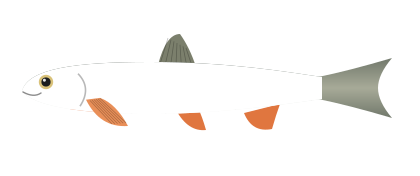
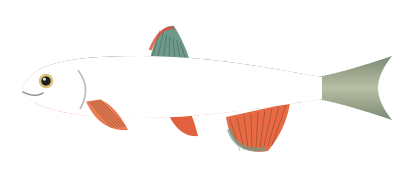
Ugui & oikawa 鯎 · 追河 · Japanese dace & pale chub

The Chikuma's everyday fish, and great fun on light tackle. They shoal in the riffles and shallows, rise all day in summer, and can be fished year-round. Oikawa males colour up vivid blue and red in early summer.

Ugui, Japanese dace, in breeding colours: silver with orange stripes along the lower flank and orange fins
Ugui, breeding colours
Oikawa, a breeding male pale chub: blue-green bars over a pink flank, red cheeks and a large orange anal fin
Oikawa, breeding male
  • Rod 6'6" – 7'6" · #1 – #3
  • Line Floating
  • Leader 9 ft · 7X
TypePatternHook sizeWhen
DryMidge / small parachute#18 – #22All year, warm afternoons
CDC Caddis#16 – #18May – Sep
WetSoft hackle spider#16 – #20Swung across the current
NymphPheasant Tail (unweighted)#16 – #20All year

Introduced species

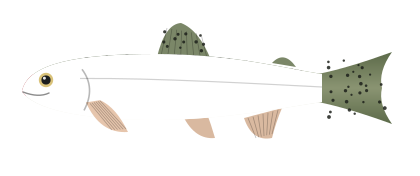
Rainbow trout 虹鱒 · nijimasu

Stocked in the main river and some larger tributaries, and covered by the same 16 March – 30 September season. Rainbows hold in the deeper runs and pools of bigger water and grow well beyond the native fish.

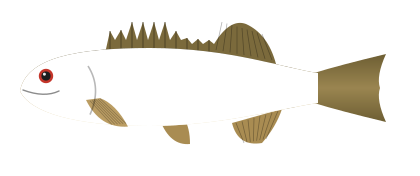
Rainbow trout: olive back, pink band along the flank, and black spots over the back, dorsal fin and tail
  • Rod 8'6" – 9' · #4 – #6
  • Line Floating, weight forward; sink tip for streamers
  • Leader 9 ft · 3X – 5X
TypePatternHook sizeWhen
DryElk Hair Caddis#12 – #14May – Sep, evenings
Parachute Adams#12 – #16All season
NymphBead-head Pheasant Tail#12 – #16All season
Bead-head Prince#10 – #14Deep runs
Stonefly nymph#8 – #10Apr – Jun high water
Egg pattern#10 – #14Early season
StreamerWoolly Bugger (olive, black)#6 – #10High or coloured water
Zonker / Muddler Minnow#4 – #8Dawn and dusk

Smallmouth bass コクチバス

An invasive predator now established in the Chikuma and famous at Lake Nojiri. Hard-fighting and aggressive on a fly from late spring to autumn. Releasing bass back alive is restricted in parts of Japan, so check the local rule before you fish for them.

Smallmouth bass: bronze body with darker vertical bars and a red eye
  • Rod 9' · #6 – #7
  • Line Floating, weight forward; intermediate for the lake
  • Leader 7.5 – 9 ft · 0X – 2X
TypePatternHook sizeWhen
StreamerClouser Minnow#2 – #6May – Oct
Woolly Bugger (olive, brown)#4 – #8May – Oct
Crayfish pattern#4 – #8Rocky bottoms, summer
SurfacePopper / foam slider#2 – #6Jun – Sep, dawn and dusk

Carp 鯉 · koi

Big, wary fish cruising the slow margins and backwaters of the Chikuma. Sight-fishing to them in summer is the closest thing here to flats fishing, and they can be fished all year.

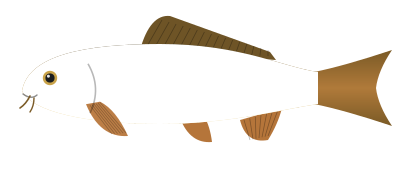
Carp: deep, golden-bronze body with large scales and barbels at the mouth
  • Rod 9' · #6 – #8
  • Line Floating, weight forward
  • Leader 9 ft · 1X – 3X
TypePatternHook sizeWhen
NymphCarp Hybrid / soft-hackle nymph#6 – #10May – Oct, to feeding fish
San Juan Worm#8 – #12After rain
SurfaceBread fly / foam berry#6 – #10Summer, calm water

Fly box

The patterns, up close.

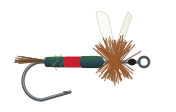
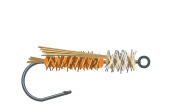
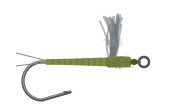
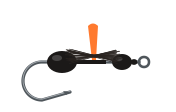
The flies from the tables above, drawn so you can match them in a tackle shop. Hook sizes are the range to carry.

Dry flies

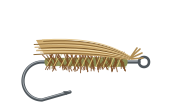
  • Elk Hair Caddis dry fly

    Elk Hair Caddis

    #10 – #16The all-round searching fly, May to September

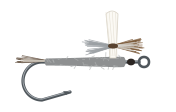
  • Parachute Adams dry fly

    Parachute Adams

    #12 – #18All season, for every trout and char here

  • Royal Wulff dry fly

    Royal Wulff

    #10 – #12Floats high in fast, broken pocket water

  • Stimulator dry fly

    Stimulator

    #10 – #12Pocket water and stonefly hatches

  • CDC Dun (olive) dry fly

    CDC Dun (olive)

    #16 – #20Spring olive hatches for selective yamame

  • Parachute Ant dry fly

    Parachute Ant

    #12 – #16Summer terrestrial, July to September

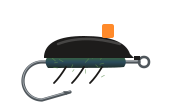
  • Foam Beetle dry fly

    Foam Beetle

    #10 – #14Under overhanging trees in summer

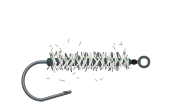
  • Griffith's Gnat dry fly

    Griffith's Gnat

    #18 – #22Midges on calm pools, and for ugui

Nymphs & wet flies

  • Bead-head Hare's Ear fly

    Bead-head Hare's Ear

    #10 – #16Cold, high water from March to May

  • Bead-head Prince fly

    Bead-head Prince

    #10 – #14Deep plunge pools and runs

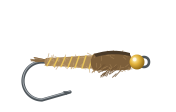
  • Pheasant Tail fly

    Pheasant Tail

    #12 – #20All season, the one nymph to never be without

  • Stonefly nymph fly

    Stonefly nymph

    #8 – #12April to June snowmelt

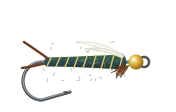
  • Caddis larva (green) fly

    Caddis larva (green)

    #12 – #14All season, bounced along the bottom

  • Sakasa kebari fly

    Sakasa kebari

    #10 – #14Reverse-hackle tenkara fly, fished wet

  • Partridge & Orange fly

    Partridge & Orange

    #12 – #16Soft hackle swung through riffles

Rods & lines

What to pack.

WaterRodLine weightLeader & tippetFor
Small mountain streams7' – 7'6"#2 – #37.5 – 9 ft · 5X – 6XIwana, yamame
Medium rivers7'6" – 8'6"#3 – #49 – 12 ft · 5X – 7XYamame, iwana, ugui
Chikuma main river8'6" – 9'#4 – #69 ft · 3X – 5XRainbow trout, ugui
Bass and carp9'#6 – #87.5 – 9 ft · 0X – 3XSmallmouth bass, carp
Tenkara3.3 – 3.9 mLevel line #3 – #41 m of 5X – 6X tippetIwana, yamame
  • If you bring one rod, make it a 7'6" #3. It covers almost every stream within half an hour of the house.
  • Tenkara was born on streams like these. A fixed-line rod and a handful of kebari is the lightest, most local way to fish them.
  • Wading: felt or studded soles for slick boulders, and chest waders from March to June when the snowmelt is icy.
  • Storage at the house: the double garage has room to hang waders and rig rods ready for the morning.

Season calendar

How the year fishes.

  • Cold water, small flies

    Snow still on the banks. Fish are deep and slow: nymph the pools, and watch for midday midge and olive hatches on the calmer runs. Midges #18–22, olives #16–20.

  • High water, big hatches

    Main rivers run high and coloured, so head for the smaller tributaries. Caddis, March Browns and stoneflies bring fish to the surface. Dries #12–16.

  • Terrestrials and evening rises

    Clear, low water. Fish the shade with ants and beetles through the day, then caddis and spinners at dusk. Go higher for cooler water. Terrestrials #10–16.

  • Last casts

    Cooler days, coloured-up fish feeding hard before spawning. Small dries and soft hackles, fished carefully. Dries #14–18.

  • Dace, chub and carp

    Iwana, yamame and rainbow trout are off limits while they spawn. Ugui, oikawa and carp in the Chikuma can still be fished on light tackle.

Permits & rules

Before you wet a line.

Every river in Japan is managed by a local fisheries cooperative, and you need its permit (yūgyoken) to fish. They are inexpensive and the money goes back into the river.

  • Buy a permit first. Day tickets are sold at the cooperative office, tackle shops and some convenience stores, and many cooperatives now sell them online. Buying from a warden on the bank costs more.
  • One permit, one cooperative. The Kōsui cooperative covers the Chikuma and its tributaries around Iiyama. The Zako River, Yomase River, Seki River and Lake Nojiri each have their own.
  • Respect the closed season and closed water. Trout and char fishing ends on 30 September. Some headwaters, and the water around the Nishi-Ōtaki dam on the Chikuma, are closed all year.
  • Return small fish. Iwana, yamame and rainbow trout of 15 cm or less must go back. We encourage barbless hooks and releasing all wild iwana and yamame.
  • Carry a bear bell. Asiatic black bears live in these valleys. Make noise on the walk in, and fish with a partner in the upper streams.
  • Watch the water. Streams below dams and after heavy rain can rise quickly.

Planning a fishing trip?

Tell us your dates and what you'd like to catch, and we'll point you to the right water, permits and local guides.

Check dates & enquire